


Optimizing Nitrogen Fertilization: The Role of Nitrification Inhibitors and Fertilizer Selection
Environmental and Agronomic Challenges of Nitrogen Use
Crops with high nitrogen requirements, such as potatoes, face a critical challenge: meeting global demand while reducing significant environmental impact. Potatoes feature high nitrogen requirements, making conventional fertilization notably inefficient, with nitrogen use efficiency (NUE) often falling below 40%. This inefficiency contributes to severe environmental losses, including nitrate leaching and nitrous oxide (N2O) emissions.
Mechanism of Nitrification Inhibitors (DCD)
Nitrification inhibitors offer a promising approach to enhance nitrogen use efficiency while mitigating nitrate leaching. Nitrification inhibitors are compounds that hinder the microbial oxidation of ammonium to nitrate. Dicyandiamide (DCD) is widely used due to its high water solubility and low volatility. DCD inhibits ammonia oxidation by inhibiting the enzyme ammonium monooxygenase. Recent studies highlight several benefits:
- Nitrification inhibitors may reduce nitrate leaching and N2O emissions by 30-50% and 34-49%, respectively.
- DCD slowed down the nitrification process, consequently reducing denitrification losses from 61% to merely 15%.
- The application of DCD increased the fixation of labeled nitrogen into the non-exchangeable soil nitrogen fraction to over 50% of the added nitrogen.
- The abundance of ammonia-oxidizing bacteria (AOB) decreased after DCD application, while ammonia-oxidizing archaea (AOA) remained largely unchanged.
Urea vs. Ammonium Sulfate
To understand what fertilizer a plant requires, soil conditions and plant type must be considered. Key differences include:
- Urea fertilizer contains 46% nitrogen, whereas ammonium sulfate contains 21% nitrogen and 24% sulfur.
- Urea is classified as a fast-release fertilizer with a much faster effect, while ammonium sulfate is a slow-release fertilizer.
- Urea fertilizer increases the alkalinity and salinity of soils, making ammonium sulfate more suitable for use in alkaline and saline soils.
- Urea is not recommended for highly alkaline lands, whereas ammonium sulfate supplies the plant with sulfur and can adjust soil pH.
Practical Application: Integrated Fertilization Strategies
Modern agriculture is integrating these scientific principles into advanced products to maximize efficiency. GREEN ISRA N21 is a practical application of these concepts; it is a blue ammonium sulfate (23.8% nitrogen and 63% sulfate) combined with the DCD nitrification inhibitor, magnesium, and iron.
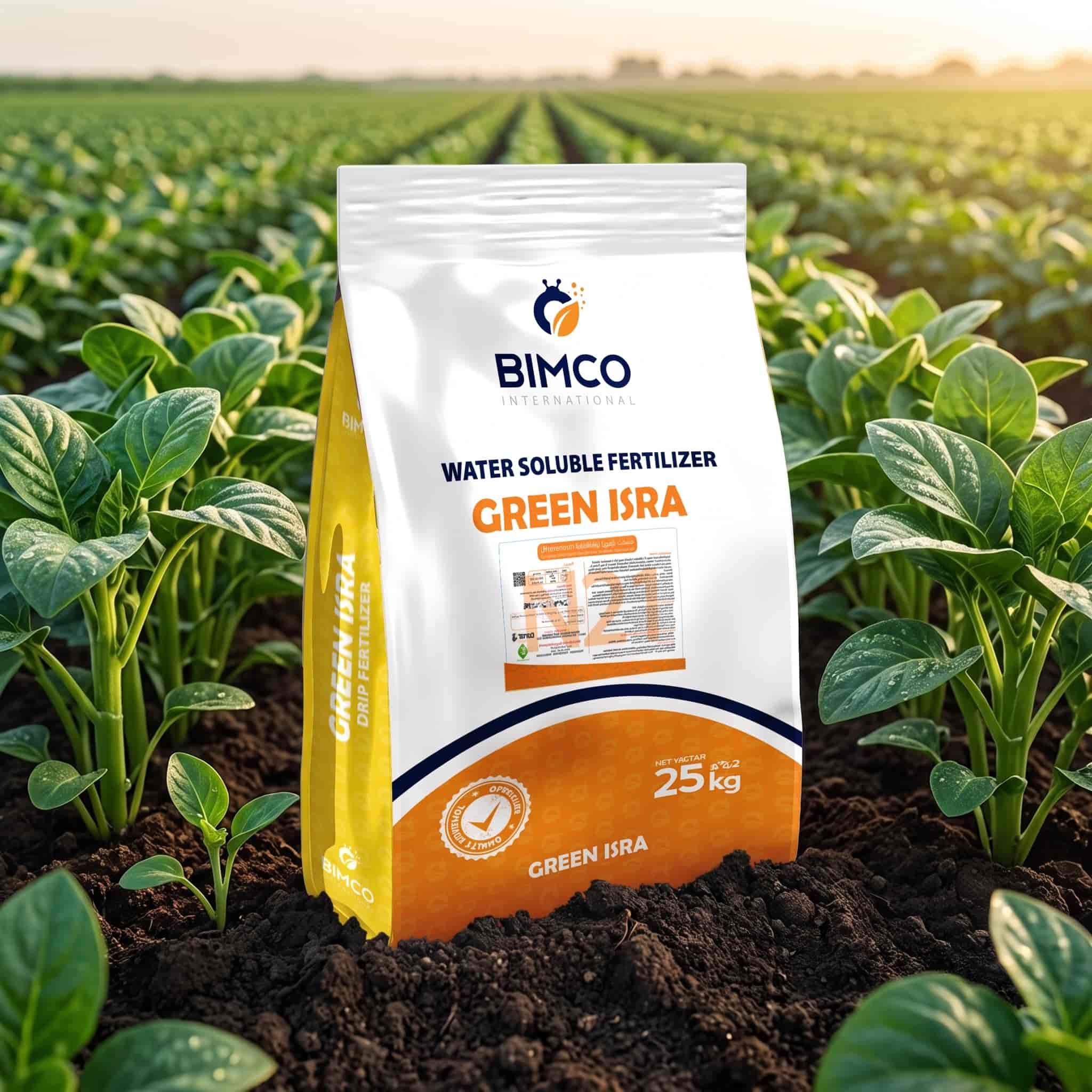
GREEN ISRA N21 features the DCD nitrification inhibitor, which supplies the plant with nitrogen slowly and for a relatively long period. The presence of magnesium and iron contributes to increased photosynthetic efficiency, and its acidic, sulfur-rich formula helps reduce potato scab exposure and accelerates crop bulking.
Frequently Asked Questions (FAQ)
1. Why are nitrification inhibitors (like DCD) added to nitrogen fertilizers?
These inhibitors are added because they hinder the microbial oxidation of ammonium to nitrate, thereby prolonging the retention of ammonium in the soil, improving nitrogen use efficiency, and aligning its availability with crop needs.
2. Which is better for alkaline soils: Urea or Ammonium Sulfate?
Ammonium sulfate is the better choice, because urea fertilizer increases the alkalinity and salinity of soils. Ammonium sulfate is suitable for use in alkaline and saline soils.
3. What is the benefit of sulfur in ammonium sulfate?
Ammonium sulfate contains 24% sulfur, which significantly affects plant growth and health. Sulfur also helps adjust soil pH and facilitates the absorption of other nutrients.
References
- [1] Optimizing Nitrogen Fertilization in Potato Cultivation: A Review Regarding Inhibitor Use (Appl. Sci. 2026).
- [2] GREEN ISRA N21 Technical Specifications.
- [3] Turnover of 15N ammonium sulfate with dicyandiamide under aerobic and anaerobic soil conditions (1991).
- [4] Does the nitrification inhibitor dicyandiamide affect the abundance of ammonia-oxidizing bacteria and archaea (2013).
- [5] What Are the Differences Between Urea and Ammonium Sulfate? (Applicable Comparison).


