


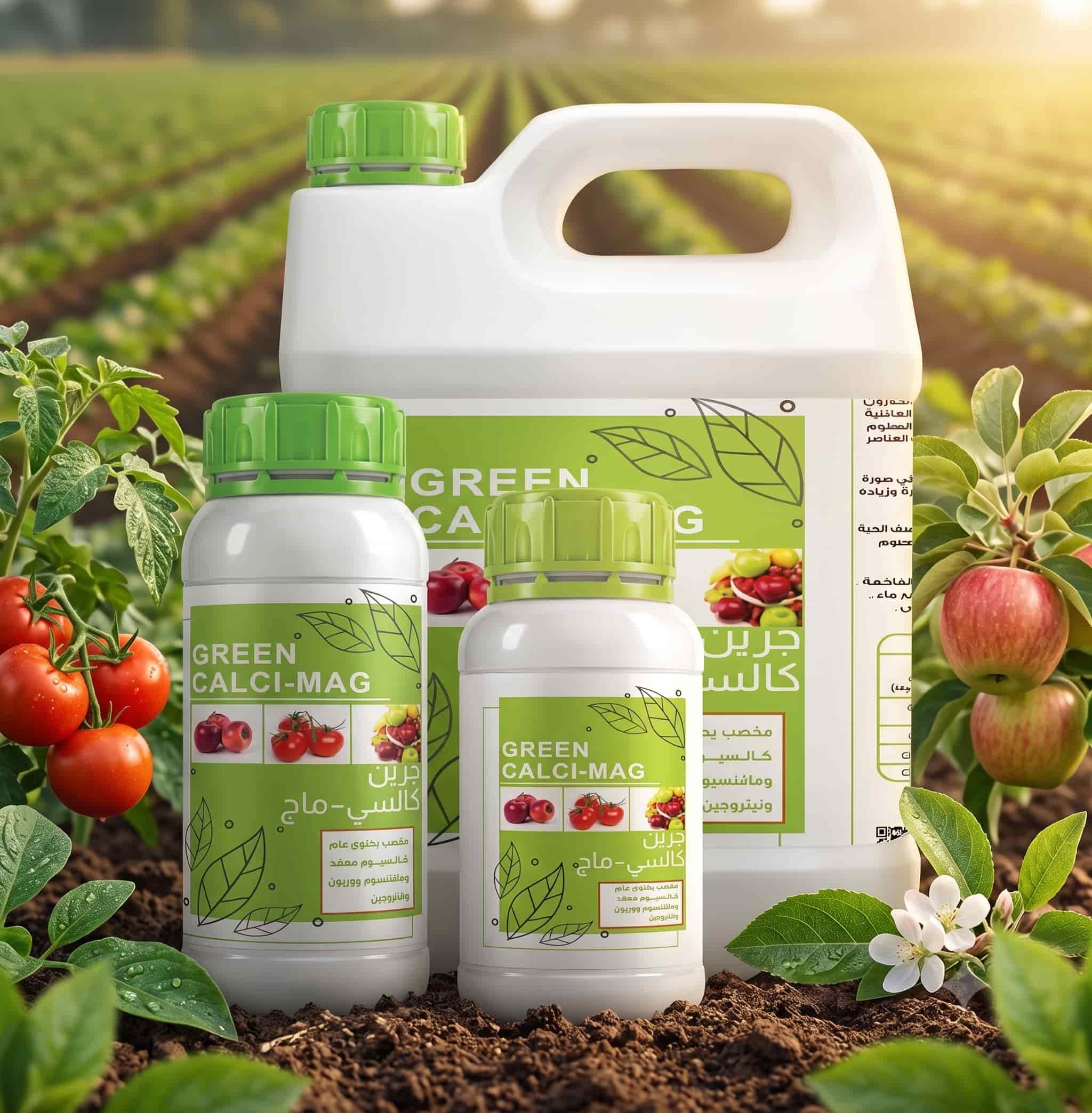
Calcium Gluconate in Modern Agriculture: Enhancing Efficiency with GREEN CALCI MAG
Calcium is one of the most critical secondary macronutrients, playing an essential role in building cell walls, regulating membrane permeability, activating enzymes, and maintaining fruit quality, firmness, and shelf life. Despite the abundance of calcium in most calcareous and alkaline soils, many crops still suffer from physiological calcium deficiency symptoms, such as blossom-end rot in tomatoes and peppers, tip burn in lettuce, and bitter pit in apples.
This paradox reveals an important scientific fact: the abundance of calcium in the soil does not necessarily mean the plant can efficiently utilize it. Hence, a new concept in plant nutrition has emerged, focusing on enhancing Calcium Use Efficiency. This is the foundational concept behind GREEN CALCI MAG.
Challenges of Conventional Calcium Sources
Most conventional calcium sources rely on the release of Ca²⁺ ions immediately after dissolution. While this provides a high concentration of calcium, it leads to several problems in alkaline environments:
- Rapid binding of calcium with phosphates.
- Formation of precipitates with carbonates and bicarbonates.
- Reduced availability of a portion of the calcium shortly after application.
- High osmotic pressure of some salts, increasing the risk of foliar burn when sprayed at high concentrations.
In calcium gluconate, the bond between calcium and gluconate slows down these reactions, providing the compound with greater stability.
Gluconate is Not Just a Calcium Carrier
The scientific value of GREEN CALCI MAG lies in the unique chemical properties of the gluconate itself:
- Forms weak complexes with calcium and some microelements.
- Helps keep elements in a soluble form for a longer period and reduces the rate of precipitation.
- Acts as a rapid carbon source for beneficial microorganisms in the root zone.
- Easily enters biological processes without leaving harmful residues.
Calcium Gluconate and Foliar Spraying
Foliar spraying is one of the applications where the advantages of calcium gluconate are most evident. Conventional calcium can cause localized damage due to rapid concentration as water evaporates. However, the organic bond in calcium gluconate, combined with lower relative salinity, makes the spray gentler on plant tissues and preserves calcium availability on the leaf surface for longer, increasing absorption chances.
Future Outlook
Modern agriculture is increasingly leaning towards smart fertilizers. In this context, GREEN CALCI MAG represents an advanced step in modern nutrition programs that require higher efficiency and greater stability for calcium compounds.
Selected References
- Fernández V., Brown P.H. (2013). From Plant Surface to Plant Metabolism: The Uncertain Fate of Foliar-Applied Nutrients. Frontiers in Plant Science.
- White P.J., Broadley M.R. (2003). Calcium in Plants. Annals of Botany.
- Marschner P. Marschner’s Mineral Nutrition of Higher Plants. Academic Press.
- Mengel K., Kirkby E.A. Principles of Plant Nutrition.


