


Agricultural Potassium Soap: Mechanism of Action and Role in Pest and Mite Control
Introduction
Agricultural Soap (or Insecticidal Soap) is one of the most widely used biological and safe control methods in Integrated Pest Management (IPM) programs. It combines high efficiency in controlling insects and mites with low toxicity to humans and the environment. It primarily consists of potassium salts of fatty acids.
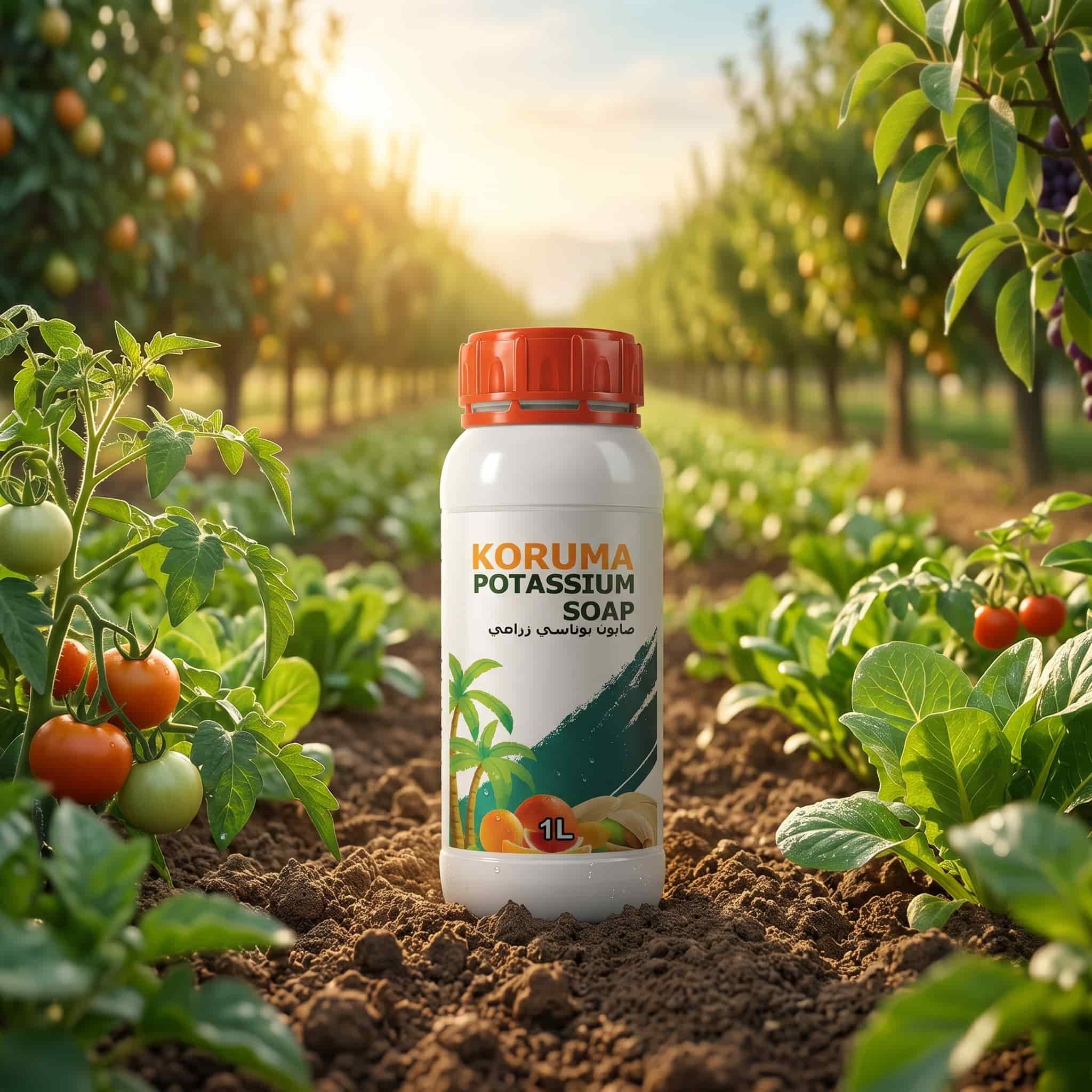
Koruma Agricultural Potassium Soap by BIMCO International acts as a contact pesticide, meaning its effectiveness relies on direct contact with the pest. It does not translocate within plant tissues, making it one of the safest compounds for both conventional and organic farming.
Mechanism of Action
Its effectiveness depends on simultaneous mechanisms that eradicate pests quickly:
- Dissolving Cuticular Wax: It breaks down the insect’s protective outer wax layer, leading to rapid water loss, dehydration, and death.
- Disrupting Cell Membranes: It directly affects the lipids of cell membranes, increasing permeability and causing cell breakdown.
- Impending Respiration: The soap solution covers the spiracles (breathing pores), leading to suffocation, especially in nymphs.
Efficacy Against Pests
Studies have proven its high efficiency against soft-bodied pests such as Aphids, Whiteflies, Thrips, Mealybugs, young Scale insects, and Spider Mites. It is highly recommended to repeat spraying every 5–7 days for optimal results against mites and thrips.
Biofilm Removal and Spray Efficiency
A significant advantage of agricultural soap is its ability to remove biofilms and honeydew produced by insects, reducing Sooty Mold growth and enhancing photosynthesis. Additionally, products like Koruma act as a surfactant, increasing the spread and adhesion of foliar sprays, thereby improving the efficiency of accompanying fertilizers and pesticides.
Environmental Advantages
It is rapidly biodegradable, leaves no harmful residues, has low mammalian toxicity, and poses a low risk for pests to develop resistance.
Frequently Asked Questions (FAQ)
1. Is Agricultural Potassium Soap safe for plants?
Yes, when used at recommended concentrations, Koruma is entirely safe for most crops and does not cause phytotoxicity (leaf burn), especially if applied early in the morning or late evening to avoid direct intense sunlight.
2. Does it harm beneficial insects like bees and ladybugs?
Since it is a contact pesticide that degrades rapidly without systemic residual activity, its impact on beneficial insects is very low, provided they are not sprayed directly. It is best applied when pollinators are inactive.
3. Can I mix Agricultural Soap with other fertilizers and pesticides?
Yes, it is often used as a surfactant to enhance the efficacy of other foliar inputs. However, a small jar test is always recommended, and it should generally not be mixed with copper-based or highly acidic compounds.
References
- Cloyd, R. A. (2019). Insecticidal Soaps and Detergents. Kansas State University Extension.
- University of California Integrated Pest Management (UC IPM). Insecticidal Soaps.
- National Pesticide Information Center (NPIC). Potassium Salts of Fatty Acids Fact Sheet.


